
Independent guide
The Dog House demo: explore the series with play credits
The Dog House demo page puts the series in one place with virtual credits and game-by-game switching. Open the original for fixed paylines, explore either Megaways title for changing reel heights or choose Muttley Crew for clusters. Each player gives you the controls and help needed to follow that game’s features.
Demo: choose a title and start the reels
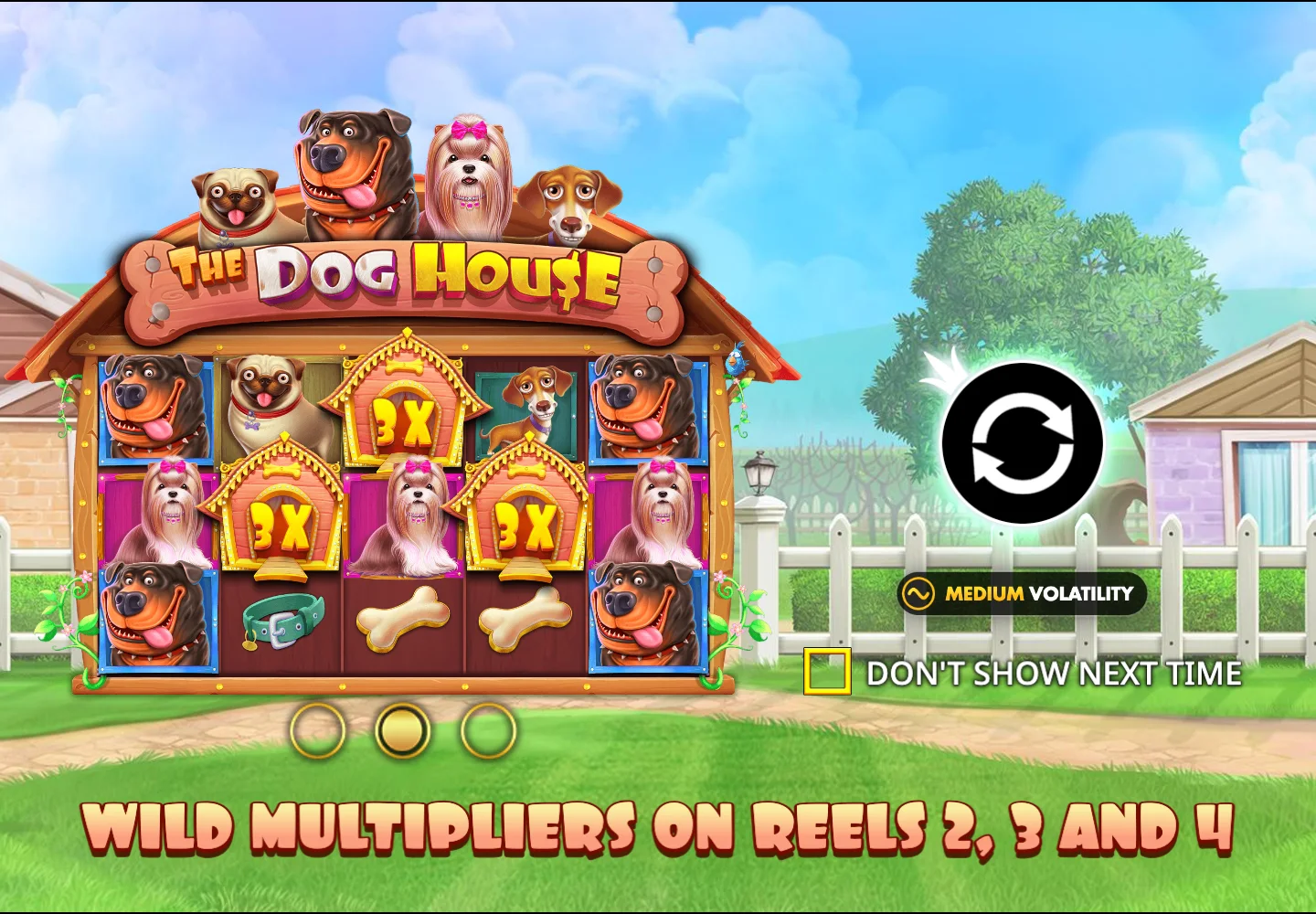
RTP: 96.51% · Max Win: 6,750× · Volatility: Medium
Demo: get to know the Pragmatic Play player
Pragmatic Play supplies The Dog House demo player, while this guide explains the features and compares the games. Select a title, start the player and use its own help panel for the full game rules. The selected name identifies which version of the family you are exploring.
The original is a clear starting point because its grid stays at 5×3 with 20 paylines. Its paytable and sticky-wild feature are fully explained in the review. Once you have followed those mechanics, the other demos give you specific variations to compare.
You can demo The Dog House by choosing a game tab, making those comparisons convenient. Move from the original to Multihold to inspect linked boards, or to Dog or Alive for collection milestones. The review explains how each feature develops, while the provider player gives you the controls, paytable and current result display.
18+ · Play responsibly. Gambling involves risk.
Demo: trace a win from symbols to total
Start with the paytable and identify the payment system. The fixed-line titles use 20 paylines, the Megaways entries use variable-height reels and Muttley Crew uses clusters of at least 5 symbols. That first distinction tells you how to read a settled board.
Make The Dog House demo play easier to follow by locating the wild values and feature trigger next. In the original, wilds carry 2× or 3× and add when they contribute to a line. Three bonus symbols across the first, third and fifth reels open its selection-grid award. Follow those displays in the demo to connect the written rule with the result.
Then compare a sequel on one mechanic. Multihold copies held positions into new boards, Royal Hunt introduces royal values and Big offers selectable modifiers. This keeps each demo visit focused on something concrete and makes the family’s differences easy to remember.
18+ · Play responsibly. Gambling involves risk.
Demo: find your favourite feature variation
The nine demos cover three layout styles and several feature systems. The original, Dice Show and the fixed-line sequels keep a compact 5×3 foundation. Multihold expands the feature into linked boards; Dog or Alive develops wild values through collection milestones; Royal Hunt adds royal multipliers; Big changes wild sizes and modifiers.
Megaways and Megaways 1000 share wider variable-height dimensions. The earlier entry provides separate Sticky and Raining award schedules, while the newer one multiplies wild values and offers standard/super entries. Muttley Crew gives you the square 5×5 cluster alternative.
Our category picks help you choose a starting tab. The original is the beginner choice, Big leads the modifier-menu comparison and Megaways 1000 has both the largest known cap and latest dated release. Open the relevant review for the full explanation of each pick.
| Game | Play demo | Read review |
|---|---|---|
| The Dog House | Yes | Read review |
| The Dog House Megaways | Yes | Read review |
| The Dog House Dice Show | Yes | Read review |
| The Dog House Multihold | Yes | Read review |
| The Dog House – Dog or Alive | Yes | Read review |
| The Dog House – Muttley Crew | Yes | Read review |
| The Dog House – Royal Hunt | Yes | Read review |
| The Big Dog House | Yes | Read review |
| The Dog House Megaways 1000 | Yes | Read review |
Demo: follow reels and counters on your phone
On a smaller screen, begin with the layout and help panel. The original’s compact grid is a useful reference; the Megaways entries widen the view, and Multihold’s feature can introduce several boards. Exploring those formats in the player gives you a practical sense of how much information each presents.
The surrounding page and the game have separate controls. The page tabs choose the title, and the full-screen option changes the viewing area where the browser supports it. Stake, spin and feature controls belong to the provider player. Keeping those roles clear makes switching between the guide and demo straightforward.
Use the orientation that gives the reels and paytable enough space on your device. During a feature, follow the counter and the special-symbol positions together. You can return to the written explanation for the trigger, opening award and extension rules.
The most revealing comparison is often a single mechanic: a copied wild in Multihold, a doubled value in Dog or Alive or a royal value in Royal Hunt. Each gives you a concrete detail to locate on the screen.
Demo: virtual credits and external Play links
Demo play uses virtual credits with no withdrawal value. Its purpose here is to let you explore the interface, paytable and feature presentation. The guide tells you which settings each figure describes, including the regular-play provider-demo percentages for Dog or Alive and Royal Hunt.
A Play link opens an external route with its own account terms and availability. The game’s active information panel identifies the supplied configuration there. Within this guide, the demos and reviews work together as a convenient way to compare layouts, understand wild calculations and discover which feature system you most enjoy following.
Give the demo a clear purpose before comparing another title. You might inspect how a wild stays in place, how the opening feature award is presented or how a completed win is broken down on the screen. Keeping the same question in mind across two games makes their differences easier to describe. The saved examples on our review pages offer another view of those mechanics, with the visible stake and feature state identified in the caption. Use them alongside the live rules rather than as a substitute for the controls in the version you have opened.