What we learned
Across 3,700 base spins, 23.27% paid something, free spins began 1 in 370 spins and the recorded return was 103.76%.
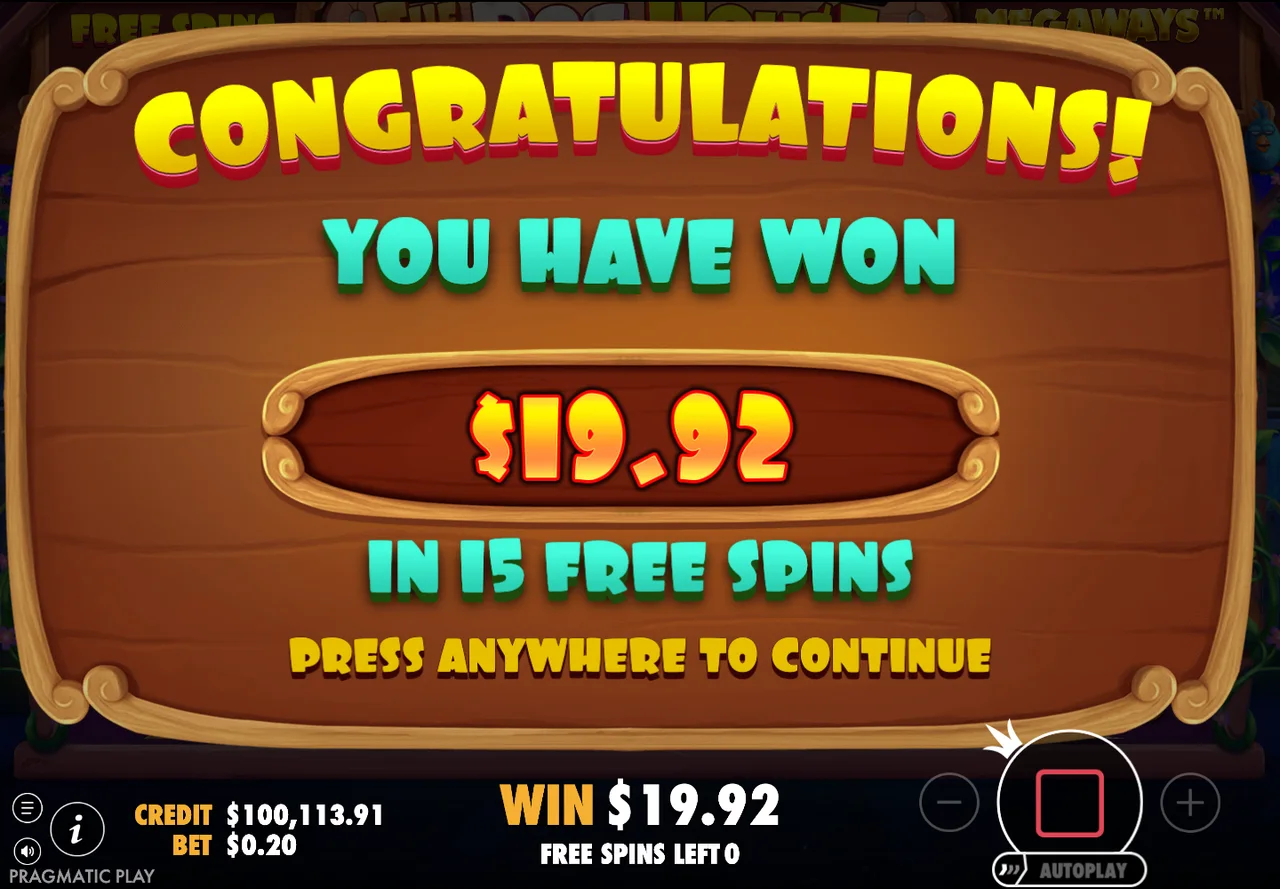
The 100 bought rounds averaged 105.65× the bet and 29% covered their price.
 18+

Game 2 of 9 · Pragmatic Play
The Dog House Megaways slot brings variable reel heights and alternative free-spin awards to the Pragmatic Play series.
Quick verdict: 8.7/10 — Variable reels and a proper Sticky-versus-Raining choice, with the highest known base RTP in this group.
By Slot Series Guide team · How we test
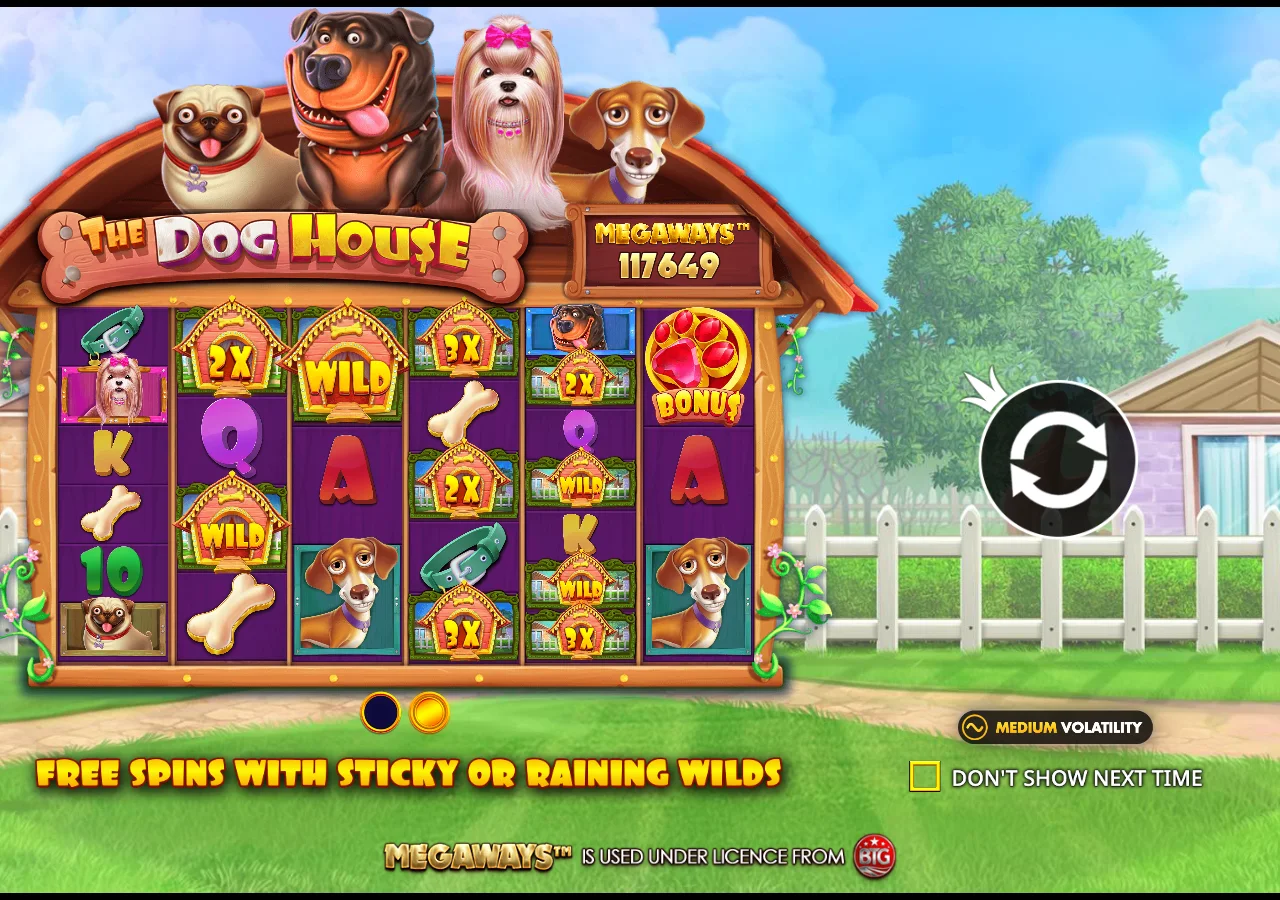
The Dog House Megaways slot takes the family onto 6 reels with changing heights. Each reel can show between 2 and 7 rows, producing a range from 64 to 117,649 ways. You get a wider, more animated playing area and a feature menu built around separate Sticky and Raining Wilds awards. It is the natural next demo when you want a different shape from the original’s fixed lines.
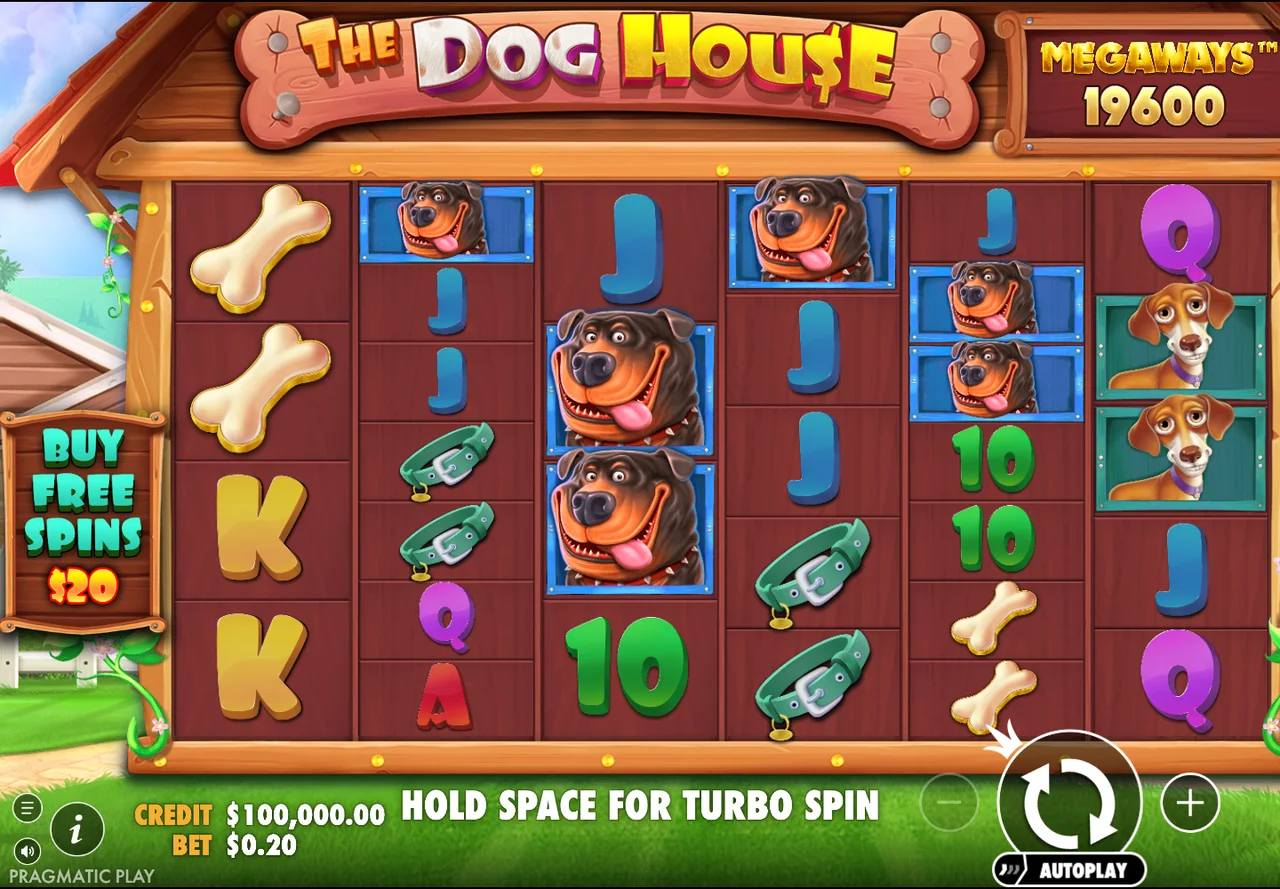
The changing window is the first thing you notice. Instead of reading the same set of line paths, you follow the ways arrangement presented by the current reels. That gives each settled screen its own shape. The review’s layout panel is useful here because it keeps the permitted range beside the demo.
The feature choices give the game its personality. Sticky and Raining have separate starting-spin schedules, so the trigger count leads into a real decision about the round you want to explore. A 100× stake feature purchase adds another route into the feature where the option is offered. Between the variable layout and that split award table, this entry has plenty to distinguish it from the original.
When reel heights change, first identify the matching positions that can contribute. Then examine any wild values within the completed combination. Reading in that order separates the changing window from the multiplier calculation and gives the displayed total a clearer explanation.
Read each settled combination alongside its selected mode.
Start with the ways display and the highlighted winning symbols. The reel heights create the arrangement, while the paytable describes the symbols that can turn it into a payment. Watching a settled result is particularly useful in Megaways because the same theme now sits inside a changing window rather than the original 20-line frame.
The complete symbol-payment matrix is available through the game’s help; this review concentrates on the layout and feature awards. That makes the live paytable the place to read a particular picture’s payment. Keep the displayed stake and the unit used by the table together as you follow the calculation.
For a practical comparison, open the original’s review alongside this one. You can read its full fixed-grid dog awards there, while this entry’s distinctive information is the ways range and split free-spin schedule. The contrast explains the appeal of the Megaways format: you spend more time following the current reel shape and less time tracing familiar fixed paths. Our separate wild and feature sections then show how this title’s other mechanics fit together.
18+ · Play responsibly. Gambling involves risk.
Ordinary play revolves around those changing reel heights. A compact window and a tall window can look quite different even though they belong to the same 6-reel game. The ways counter summarises the current layout, and the settled result shows which combinations paid. Following those displays together is the clearest way to get familiar with the format.
The possible ways range from 64 to 117,649 ways. You can compare that range directly with Megaways 1000, which shares the same dimensions. The distinction between those games therefore lies in their wild systems and feature options rather than the size of the possible reel window.
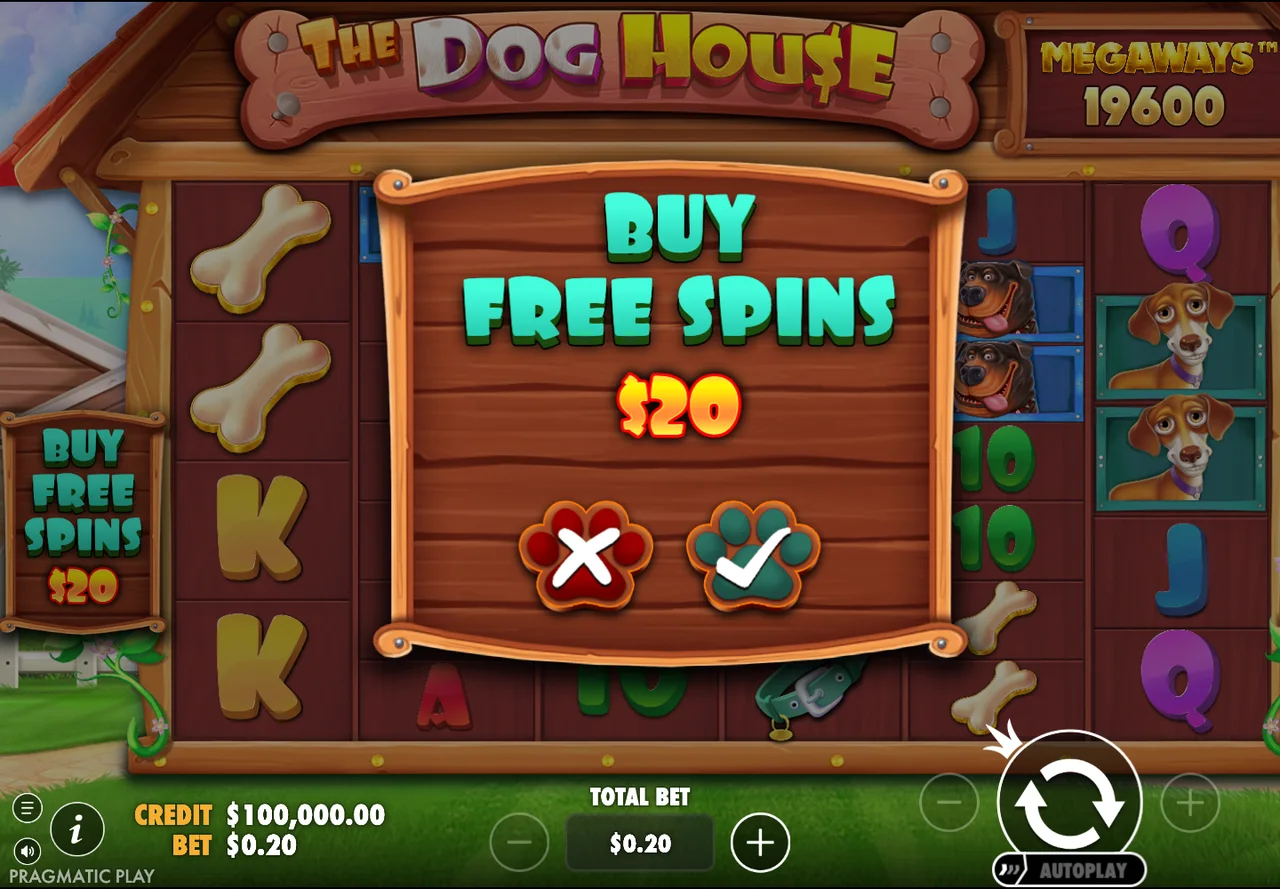
You can also buy entry into the feature for 100× stake. It sits alongside ordinary spinning as a separate route into the bonus. Open the mode explanation before comparing the Sticky and Raining awards: their starting totals are deliberately different. For a player who enjoys a changing screen and a choice of feature presentation, this gives the earlier Megaways game a very clear place in the family.
The reel window and the mode choice deserve separate attention. Changing heights affect the positions available for combinations, while the selected free-spin mode determines how wilds behave during the feature. Both changes can be visible on the same screen, but they answer different questions about the game. Follow the reel arrangement first, then connect the selected mode with its own rules.
A useful demo exercise is to compare the opening feature screen with a later settled result. The opening counter explains the starting award. Wild positions and multiplier values then help explain the combinations that actually form. Looking at both moments makes the contrast between Sticky and Raining clearer than comparing only their initial spin totals.
The earlier Megaways has a focused purchase menu, which makes it a helpful reference when exploring the later edition’s additional tiers. Preserve the title and selected mode when moving between them. Similar reel counts and related names make the family connection obvious, while the feature conditions explain why their menus should still be read independently.
Use each game’s own rules when comparing the closely related entries. The screenshots show moments from our demo play, while the statistics describe those labelled sessions. Together they make the game easier to explore, while the active help panel remains the place to confirm the configuration of the demo currently open.
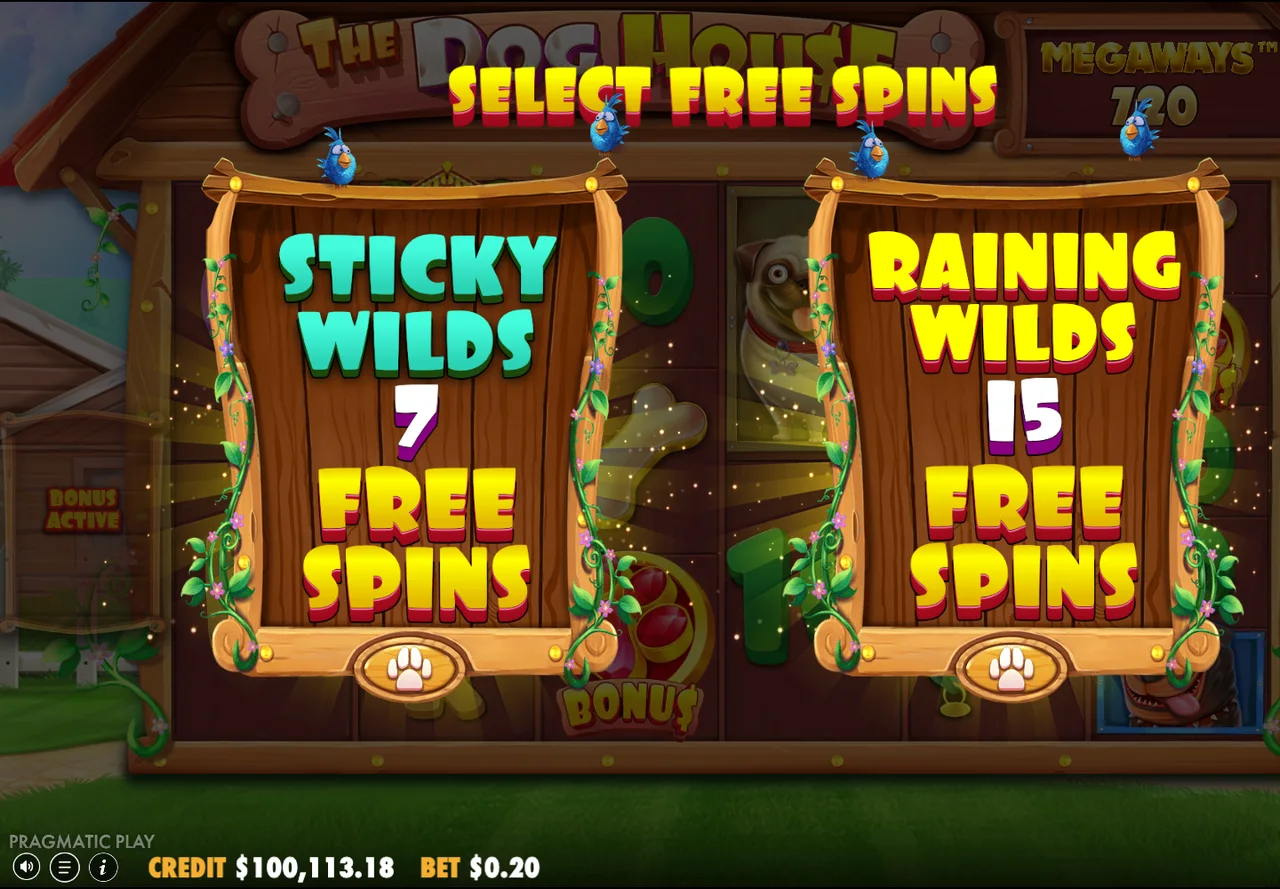
The scatter count sets the starting award for each mode. With 3, 4, 5 or 6 scatters, Sticky Wilds awards 7, 12, 15 or 20 spins. The corresponding Raining Wilds awards are 15, 18, 25 or 30. Read across the same trigger count and you can see the contrast immediately: the Raining schedule starts with more spins at every listed level.
This is the feature table worth exploring in the demo. Look at the scatter result, identify the available mode and follow its own counter. The separate schedules make the choice feel like a proper part of the bonus rather than a cosmetic label. Each option gives you another way to experience the variable-height grid.
The bonus buy costs 100× the stake. Wilds appear on reels 2–5, with 2× or 3× in the base game and 1×, 2× or 3× in free spins; winning multipliers multiply together. Sticky Wilds keeps wilds in place, while Raining Wilds can add up to six wilds. We enjoy how these different wild rules complement the two starting-spin schedules.
The larger trigger counts make the award comparison especially clear. Four scatters correspond to 12 Sticky or 18 Raining spins, while 5 correspond to 15 or 25. At 6 scatters, the starting totals are 20 and 30. Those paired rows give you a concise way to describe the opening menu. Read the count from the trigger and then the selected label, and the starting counter has a precise explanation before the feature proceeds.
| Scatters | Sticky wilds | Raining wilds |
|---|---|---|
| 3 | 7 | 15 |
| 4 | 12 | 18 |
| 5 | 15 | 25 |
| 6 | 20 | 30 |
Our demo samples describe the recorded sessions only. They do not predict future results.
3,700 · Base spins
Focus or point to a bar to read its value.
| Game | Price (× bet) | Rounds | Average | Median | Best | Returned in our run (%) | Paid back (%) |
|---|---|---|---|---|---|---|---|
| Sticky wilds | 100× | 50 | 112.19× | 66.85× | 872× | 112.19% | 24% |
| Raining wilds | 100× | 50 | 99.11× | 50× | 576.4× | 99.11% | 34% |
Across 3,700 base spins, 23.27% paid something, free spins began 1 in 370 spins and the recorded return was 103.76%.
The 100 bought rounds averaged 105.65× the bet and 29% covered their price.
18+ · Play responsibly. Gambling involves risk.
This Megaways entry has an RTP of 96.55%, medium volatility and a maximum of 12,305× stake. Its RTP is the highest known base RTP among the nine games in this guide. Its cap also sits above the original’s 6,750×, making the earlier Megaways a strong all-round specification comparison.
Those facts work well alongside the feature description. The medium label places it with most of the fixed-line games, while the variable layout and two award schedules give it a more elaborate presentation. You can enjoy that combination without needing the largest possible cap in the family.
Megaways 1000 has 96.5% and a 25,000× maximum. That gives the newer title the cap advantage and the earlier title the base-RTP advantage. We keep both columns visible because they answer separate comparison questions. The percentage describes theoretical return for a configuration; the cap describes its upper payout limit. The help panel in the opened game is the reference for its active setting.
Choose this earlier Megaways entry when you want changing reel heights and a clean comparison between Sticky and Raining award schedules. Its 100× purchase is a simpler known feature-entry menu than Megaways 1000’s set of standard and super prices. There is plenty of reel activity without the newer game’s expanded multiplier catalogue.
Choose Megaways 1000 when the multiplier system is the attraction. Its wild values reach 1,000×, qualifying values multiply, and its maximum is 25,000×. The common 6-reel format gives you a useful comparison frame: the window dimensions match, so you can concentrate on the feature differences.
Against the original, the earlier Megaways feels like a change of playing system. The original offers 20 fixed paylines on a 5×3 grid and additive 2× or 3× wilds. Here, the variable reel heights and alternative spin awards drive the experience. Try both if you are deciding between following a stable set of lines and reading a changing ways layout.
The earlier entry also has a clear role beside the fixed-line sequels. Multihold offers more boards, Dog or Alive offers milestone upgrades and Big offers modifier configurations. Megaways changes the arrangement you read in ordinary play as well as the opening feature choice. That makes it particularly relevant when you want the payment structure itself to feel different, while retaining the series theme and one known feature-entry price.
The wider Megaways grid is the detail to explore on your phone. Open the demo, watch how the reel heights are presented and bring up the help panel beside the current layout. With 6 reels and variable rows, the amount of information on the screen changes from result to result.
Pay particular attention to the ways counter and the winning-symbol highlight. Those displays explain different parts of the same result: the counter describes the window, while the highlight identifies its payments. Seeing them together makes this a much more informative demo than a still screenshot of a tall reel arrangement.
When the feature menu appears, read the Sticky and Raining starting awards at the same trigger count. That is the central comparison to make in this version. You can return to the table in this review as you explore the controls. For another phone-screen comparison afterwards, the original keeps a compact fixed grid, while Megaways 1000 retains this wider format with a different feature menu.
18+ · Play responsibly. Gambling involves risk.
This is an appealing middle ground between the original and the more elaborate Megaways 1000. The reel window changes, the feature offers separate award schedules and the 100× feature purchase keeps the entry menu straightforward. It is a good demo choice when you want the series to feel wider and more animated.
Its 96.55% RTP also gives it a clear comparison strength. We like that the specification and feature design both offer something distinctive: the highest known base RTP in this group, plus a direct Sticky-versus-Raining starting-award choice. The 12,305× maximum sits comfortably above the original’s cap.
The trade-off is that our fact set leaves several detailed wild and retrigger fields open. For those calculations, the game’s own help is the reference. Our rating rewards its feature breadth and layout, and the pace of our base-game spins contributes separately. For variable reels with a focused feature menu, the earlier Megaways remains an easy game to recommend exploring.
The paired starting-award rows are a particularly useful comparison tool. They let you describe the opening feature precisely by scatter count and mode, giving the wider reel format a clear bonus identity alongside its strengths in the specification comparison.
It has 6 reels with 2 to 7 rows per reel and a possible range of 64 to 117,649 ways. The reel window changes as you play, giving the familiar Dog House theme a different payment structure from the original fixed-payline game.
Sticky awards 7, 12, 15 or 20 spins for 3, 4, 5 or 6 scatters. Raining awards 15, 18, 25 or 30 for the same trigger counts. Compare matching scatter rows to see the starting difference between the modes.
Yes. Feature entry costs 100× stake. The game’s purchase screen provides the mode details for the version you open. This is a more focused known feature-entry menu than the three price tiers listed for Megaways 1000.
The base RTP is 96.55%, volatility is medium and the maximum is 12,305× stake. The RTP leads the base-game RTP percentages in our nine-game comparison, while Megaways 1000 has the larger maximum. Each game’s active help identifies the supplied configuration.
Here, you can compare the layout, starting-spin schedules and purchase price. Detailed wild combination and retrigger fields remain open. Use the game’s help for those calculations; our review concentrates on the mechanics covered here and compares them with the newer Megaways entry.
Players who like changing reel heights and want to compare two starting-award schedules have plenty to explore here. Start with the demo to follow the ways display, then compare Megaways 1000 for a broader multiplier catalogue or the original for a compact fixed-line format.

RTP: 96.51% · Max Win: 6,750×

RTP: 96.51% · Max Win: 6,750×

RTP: 96.06% · Max Win: 9,000×

RTP: 96.52% · Max Win: 10,000×

RTP: 96.5% · Max Win: 7,500×

RTP: 96.53% · Max Win: 8,000×

RTP: 96.53% · Max Win: 15,000×

RTP: 96.5% · Max Win: 25,000×