What we learned
Across 3,700 base spins, 20.35% paid something, free spins began 1 in 308 spins and the recorded return was 90.47%.
The 100 bought rounds averaged 83.9× the bet and 25% covered their price.
 18+
Game 6 of 9 · Pragmatic Play · 2024
Cluster wins and treasure-chest wilds change the familiar formula
Quick verdict: 8.4/10 — The cluster pick: a 5×5 board, sticky treasure chests and a detailed menu of spin awards.
By Slot Series Guide team · How we test
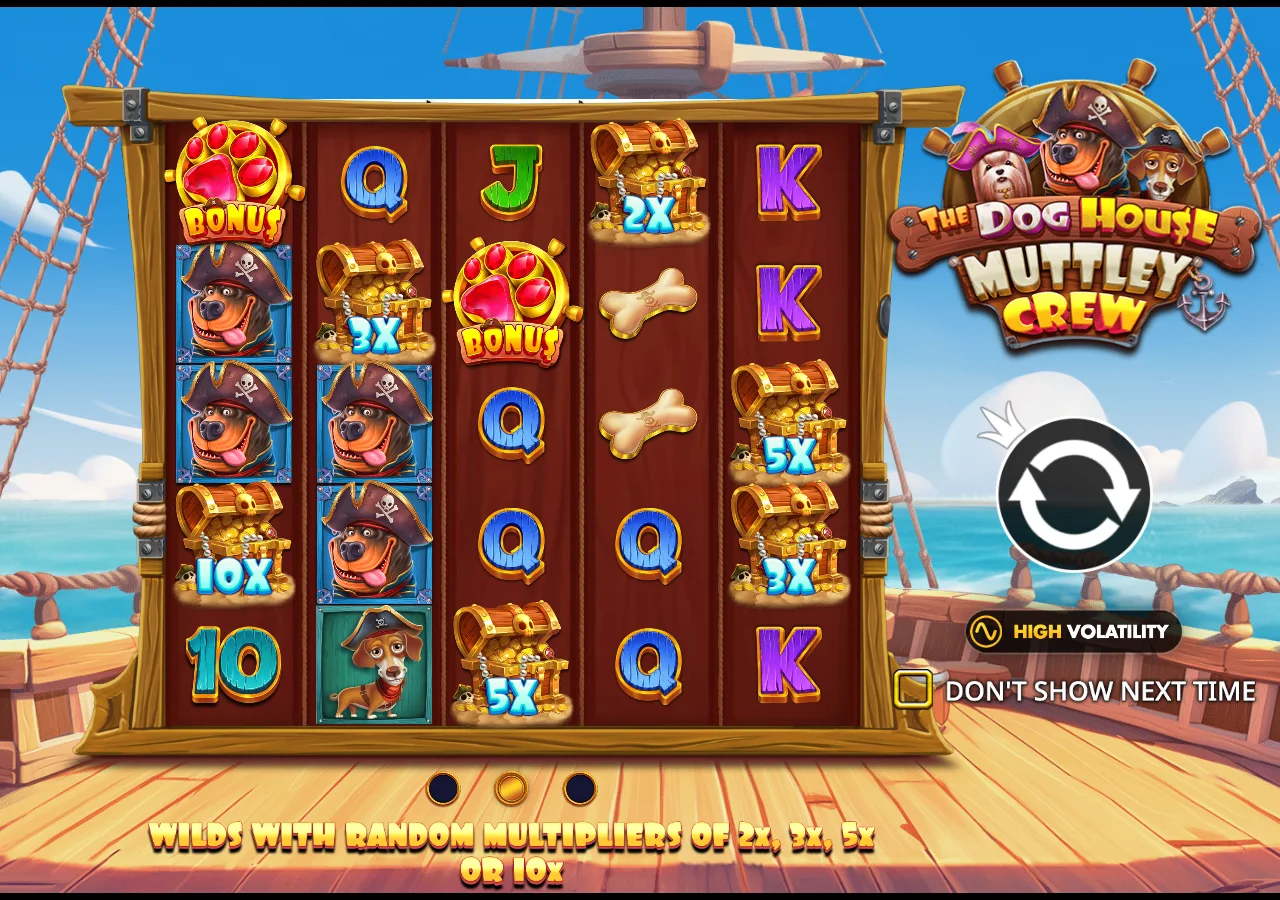
The Dog House Muttley Crew changes the family’s payment system to clusters on a 5×5 grid. Released on 3 October 2024, it pays for clusters of at least 5 symbols and brings treasure-chest wilds into the action. It is the game we open when we want the series to feel different from the first settled screen.
Those chest wilds carry 2×, 3×, 5× or 10× multipliers. Qualifying values add, and the wilds become sticky in free spins. The feature offers several starting awards, an overlay-based retrigger schedule and a three-tier purchase menu. There is a lot to explore beyond the change of layout.
The specification combines high volatility, 96.5% base RTP and a 7,500× maximum. Its appeal is the cluster format and the way sticky chest positions develop during the feature. If you enjoy the Dog House multiplier idea but want a square playing area instead of fixed lines or changing reel heights, Muttley Crew is the clear alternative.
A connected group should be identified within the current result before its payment is compared with another entry. The relevant question is how this game recognises the group and applies its special symbols. Familiar artwork supplies the theme, while the cluster payment system supplies the rule. Read the result display with that distinction in mind. It keeps a cluster example informative without translating it into the fixed-line language of the original.
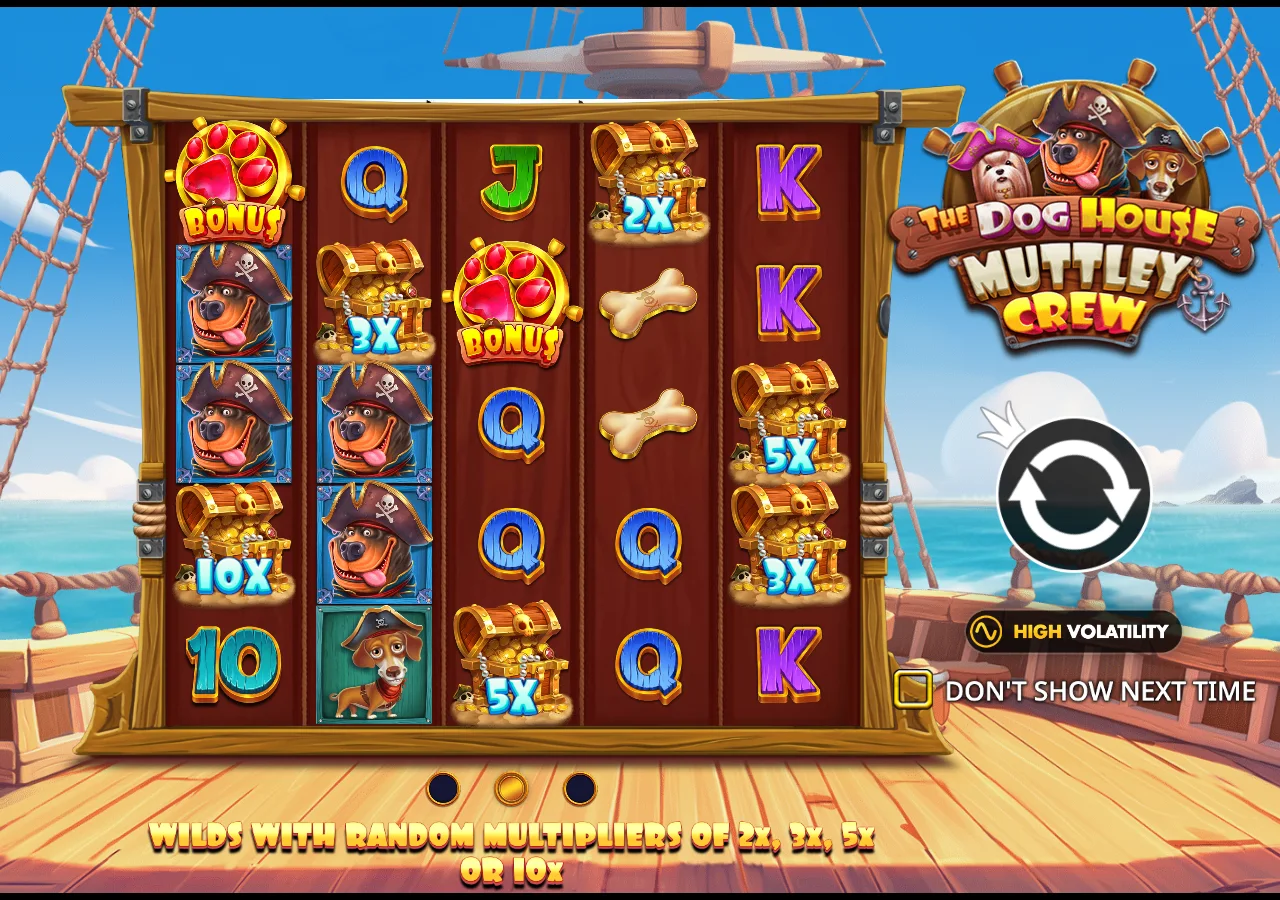
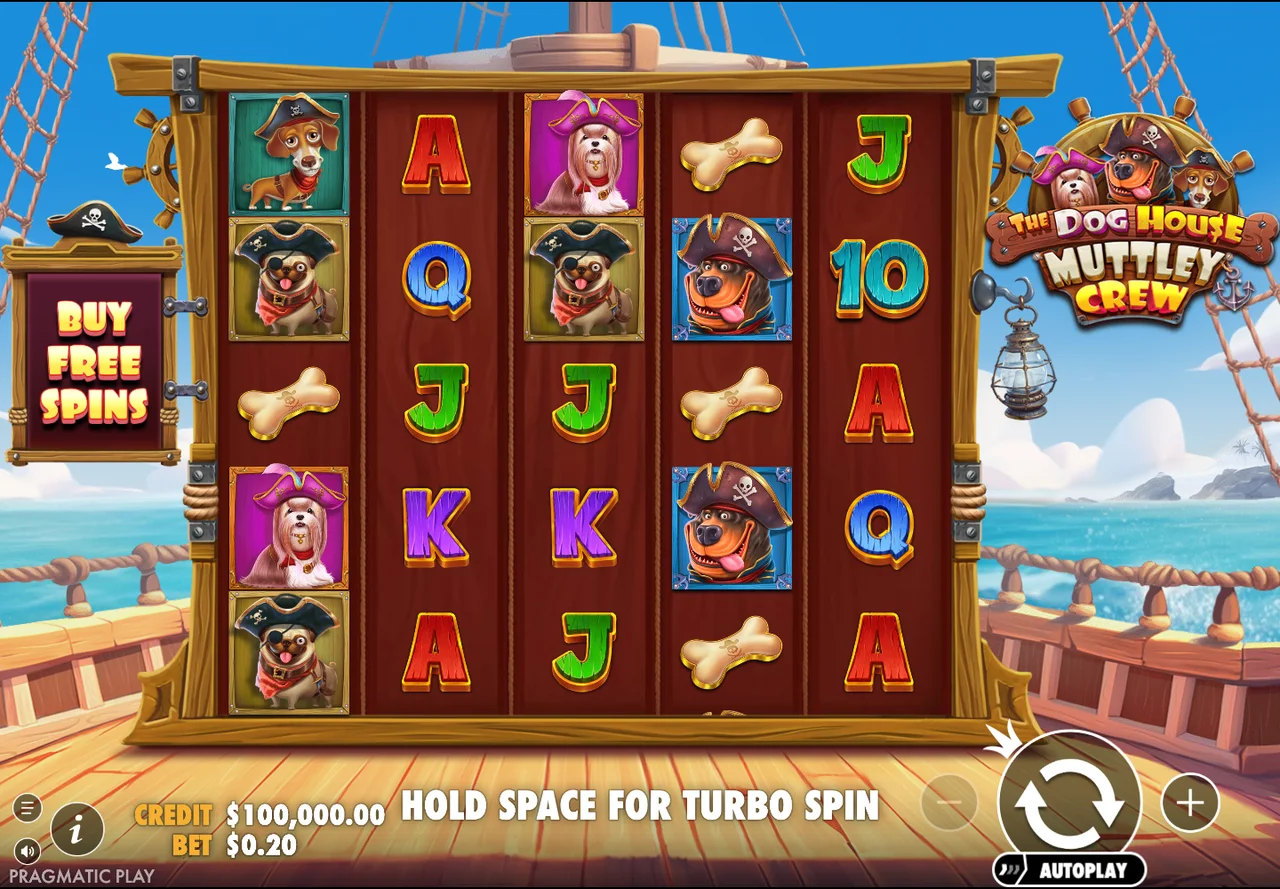
The cluster system starts at 5 symbols. That shifts your attention from a fixed line path to groups on the 5×5 board. You can watch the game highlight a settled cluster, then read its award alongside any contributing multiplier wilds. The square layout makes this a noticeably different demo from the original.
The wild values also offer a broader starting set than the original’s 2× and 3×. Muttley Crew has 2×, 3×, 5× and 10× chest multipliers, combined by addition when they qualify. Follow the participating symbols to see the relationship between the cluster and those values.
For the full cluster definition and ordinary-symbol awards, open the paytable in the game. Our comparison focuses on the minimum paying cluster size, layout and special-symbol rules. That combination gives you a clear reason to try this title: the familiar held-multiplier idea is now part of a different payment structure.
That square-board structure gives the familiar multiplier theme a fresh visual rhythm from the first settled result.
Treasure chests are Muttley Crew’s wild symbol. Their 2×, 3×, 5× and 10× values give the board a distinct multiplier vocabulary, with qualifying values added together. Inside free spins the chests hold their positions, creating a pattern you can follow across the feature.
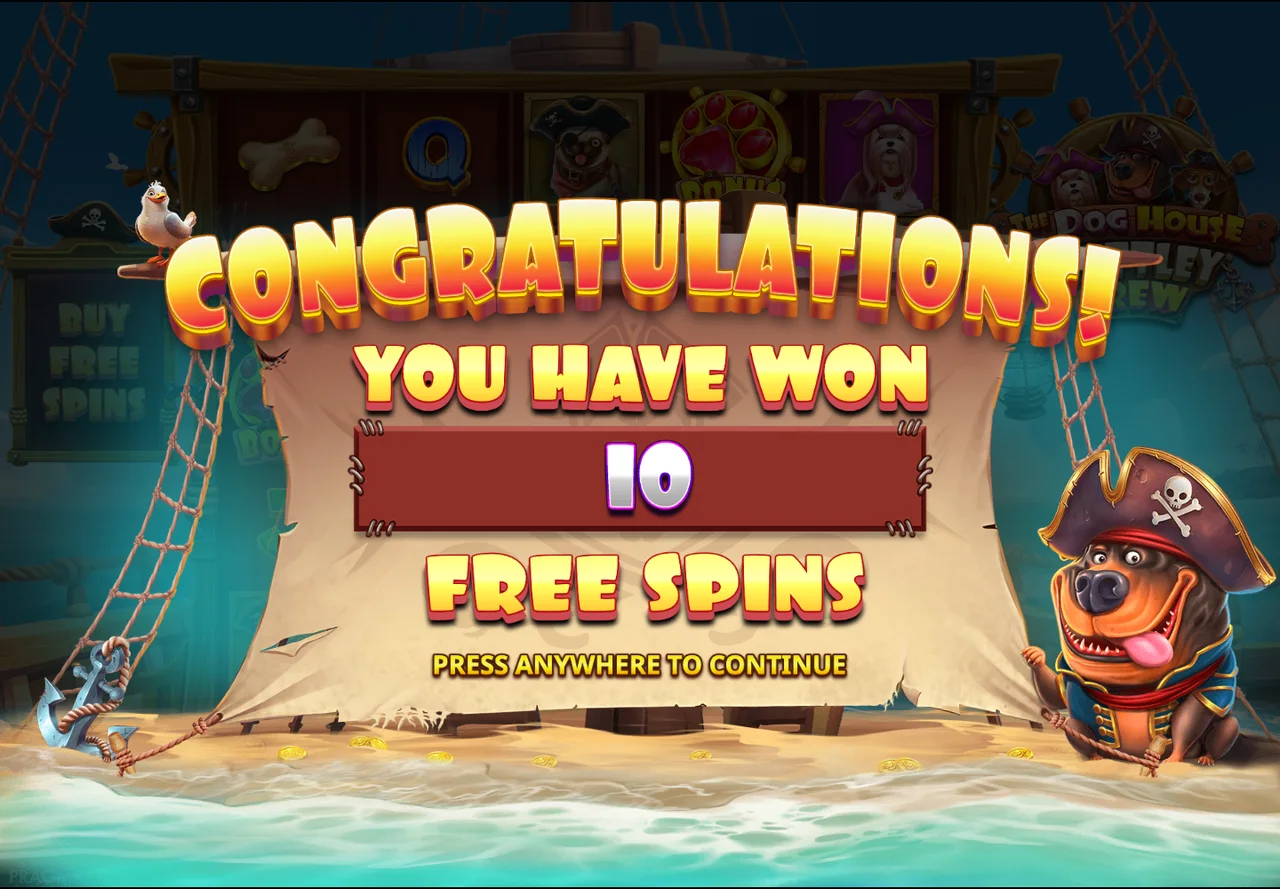
Scatters determine the starting award. Three, 4 or 5 scatters lead to 10, 15 or 20 spins, plus a 2× stake scatter payment. The overlay symbols then supply another feature role through their own retrigger table. It is useful to read those systems separately: scatters set the opening total, while the overlay counts award extra spins.
The game’s own paytable supplies the ordinary-symbol values and detailed cluster instructions. Watch a settled result to identify the paying group before reading its chest multipliers. That keeps the square board easy to follow and gives each special-symbol type a clear job in the feature explanation.
18+ · Play responsibly. Gambling involves risk.
Ordinary play uses the 5×5 cluster layout, with groups of at least 5 symbols forming this game’s payment system. The treasure-chest wilds bring their additive multipliers into qualifying results. You are reading the shape of the paying group rather than tracing the original’s 20 fixed paylines.
The base RTP is 96.5% and the volatility label is high. This makes Muttley Crew a specialist format choice in our rating: the layout and chest treatment offer plenty of interest, while the fit factor accounts for the high-volatility specification. The maximum is 7,500× stake.
The feature menu confirms three purchase prices, linked to different starting spin awards. That gives the title more entry variety than Multihold’s single known 100× feature-entry option. The natural trigger also has three listed award levels, so the scatter count is an important part of reading the transition into free spins. Both routes lead into the game’s distinctive sticky-chest feature.
The cluster system changes the first question to ask about a result. Instead of tracing a familiar fixed payline, identify the connected matching group and the special symbols involved. The theme provides an easy family connection, while the way a qualifying win is formed gives this entry its own reading task.
Follow the completed display before comparing its payment with a result from another game. A group size, a wild effect and a total award describe different parts of the same event. Keeping those details together makes the screen easier to explain and avoids treating a similar dog portrait as proof that both games use identical payout rules.
The feature-entry tiers provide another useful comparison. Read the displayed opening award alongside the selected price, then inspect how the feature itself develops. A larger starting counter is an entry condition; the subsequent symbol behaviour supplies the rest of the sequence. The menu and the rule sections therefore answer complementary questions.
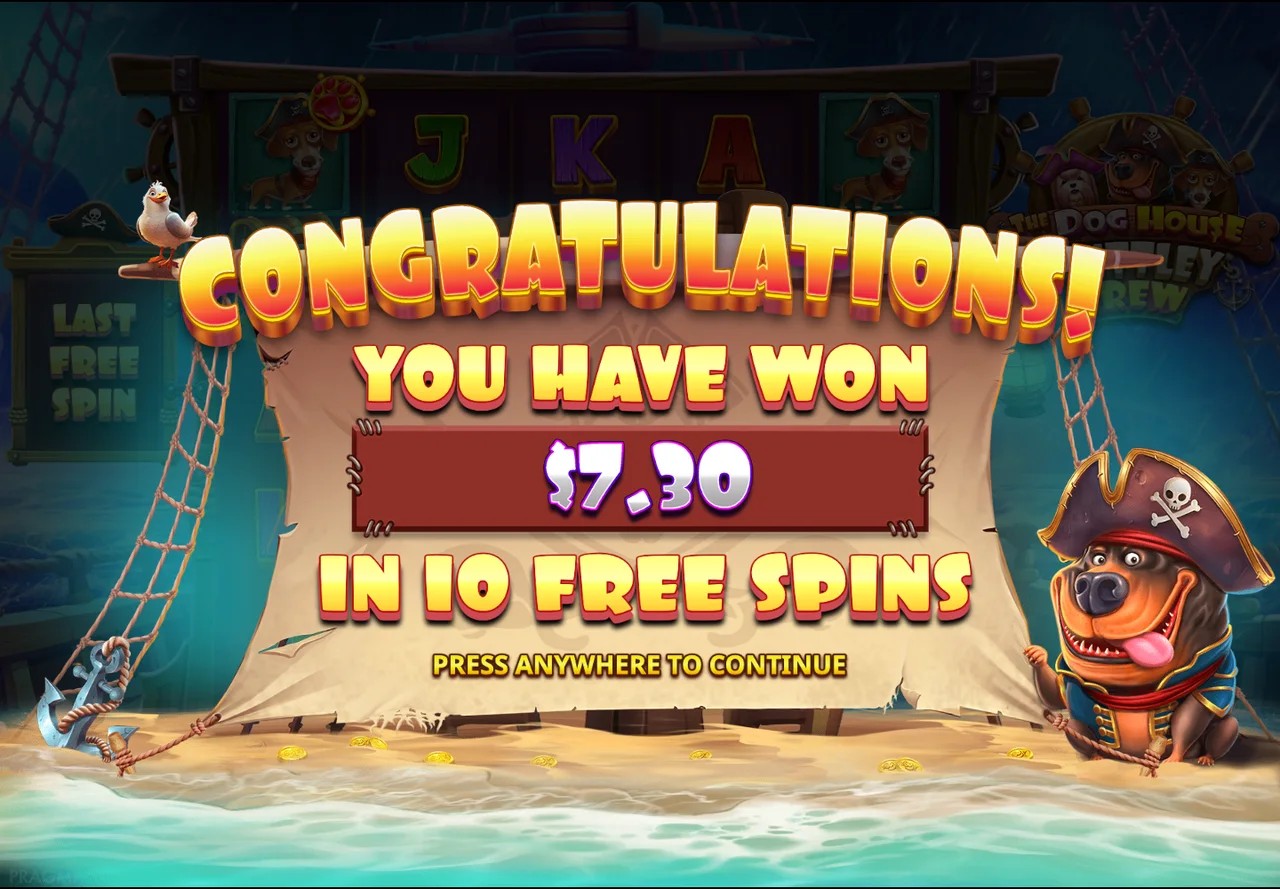
We treat the captured screens as examples of those visible stages. Their captions preserve the inspected amounts and awards in virtual credits. Our session results describe the demo spins we played, while the review explains how the game’s mechanics work. Used together, those views make the cluster format easier to explore without borrowing assumptions from the fixed-line entries.
Land 3, 4 or 5 scatters for 10, 15 or 20 free spins respectively. The feature award also comes with a 2× stake scatter payment. The starting table is direct: identify the scatter count, read the corresponding spin total and then follow the sticky treasure chests on the square board.
The retrigger schedule uses overlay counts. Two, 3, 4 or 5 overlays award another 5, 10, 20 or 30 spins. This gives the feature an extension system that is quite different from Multihold’s grid unlocks or Dog or Alive’s multiplier milestones.
We like the way those ingredients fit the cluster layout. Sticky chest positions become the continuing pattern, while the overlay table supplies additional spin awards. You can follow each role independently and then see how they combine over the round. The result is a distinctive version of the held-wild idea, with more starting-award and extension detail than a simple single-schedule bonus.
| Scatters | Free spins |
|---|---|
| 3 | 10 |
| 4 | 15 |
| 5 | 20 |
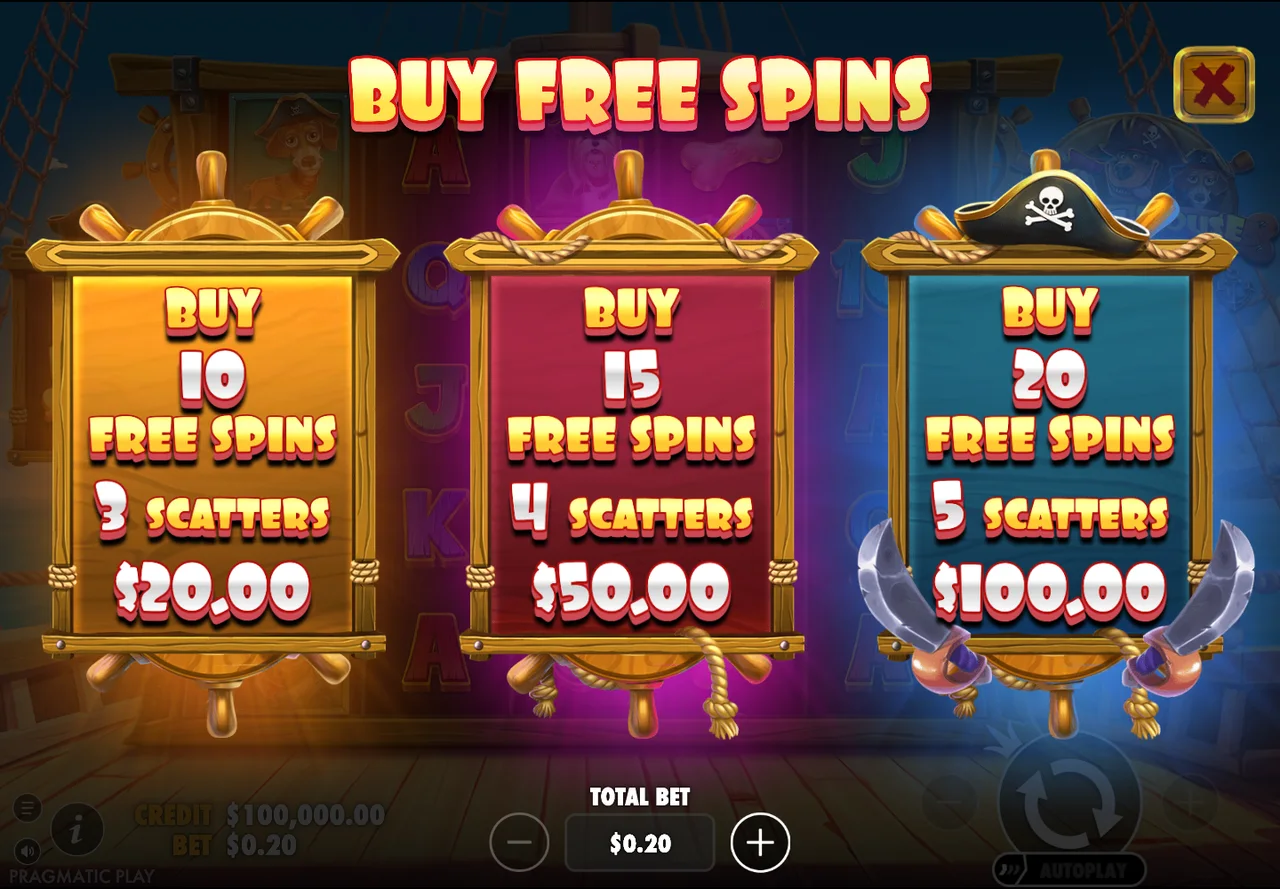
The three feature-entry prices are 100×, 250× and 500× stake. They correspond to starting awards of 10, 15 and 20 spins. This is a clean menu to compare because each price is paired with a stated opening total, letting you read the available entries side by side.
The purchase RTPs are 96.54%, 96.53% and 96.54% in the same order. The base figure is 96.5%. We keep those mode figures separate because they belong to the listed purchase entries, while ordinary play has its own configuration value.
For purchase variety, The Big Dog House is our pick because its middle tier lets you choose a modifier and its top tier combines both. Muttley Crew instead offers a straightforward ladder of opening spin counts. That makes it easy to explain and gives cluster-game fans several feature entries to explore in the demo. The in-game menu identifies the choices offered in the version you open.
| Entry price × stake |
|---|
| 100 |
| 250 |
| 500 |
Our demo samples describe the recorded sessions only. They do not predict future results.
3,700 · Base spins
Focus or point to a bar to read its value.
| Game | Price (× bet) | Rounds | Average | Median | Best | Returned in our run (%) | Paid back (%) |
|---|---|---|---|---|---|---|---|
| Free spins | 100× | 100 | 83.9× | 37.38× | 598× | 83.9% | 25% |
Across 3,700 base spins, 20.35% paid something, free spins began 1 in 308 spins and the recorded return was 90.47%.
The 100 bought rounds averaged 83.9× the bet and 25% covered their price.
18+ · Play responsibly. Gambling involves risk.
Muttley Crew’s base RTP is 96.5%, its volatility is high and its maximum win is 7,500× stake. Its purchase entries have separate RTP percentages for the three listed entries. These figures give the cluster game a clear specification profile alongside its distinctive feature design.
The cap is higher than the original’s 6,750× but below Dog or Alive’s 10,000×. Both Muttley Crew and Dog or Alive carry the high-volatility label, making them a useful comparison for players choosing between different feature systems within that part of the family. One uses clusters and chests; the other uses fixed lines and multiplier-doubling milestones.
Our rating rewards Muttley Crew for the change of payment system, the chest values and the overlay retrigger awards. The pace in our base-game spins contributes separately from those design factors. For the theoretical setting of an opened game, the information panel remains the reference; the figures here keep the separate base and purchase configurations easy to compare.
Muttley Crew is the strongest format change from the original. Instead of 20 paylines on 5×3, you get clusters on 5×5. The sticky-multiplier idea remains recognisable, but the way you read a winning arrangement changes immediately. That is the main reason to choose its demo.
Against Dog or Alive, the comparison is between chest-based clusters and a fixed-line multiplier ladder. Dog or Alive doubles wild values at collection milestones and adds spins at those thresholds. Muttley Crew uses its own starting-spin table and overlay-based extension awards. Both have a high-volatility label, but their feature sequences are quite different.
Against The Big Dog House, Muttley Crew offers a different payment system rather than a wider wild-size and modifier menu. Its purchase tiers are tied to starting spins, while Big’s entries select modifier combinations. Choose Muttley Crew when the square board and cluster highlights are the attraction; choose a fixed-line sequel when you prefer to retain familiar line paths.
The 5×5 board is the first thing to inspect in the mobile demo. Open the paytable, then watch how the game highlights a paying cluster and its participating chest wilds. That gives you a practical feel for the square layout before moving into the feature instructions.
During free spins, keep the held chests and spin counter in view. The chest pattern supplies continuity across the round, while overlay awards can extend the counter. Follow those displays as separate pieces of information and the feature becomes easy to describe even when several symbols are active.
The purchase screen is another useful comparison point. Its 100×, 250× and 500× tiers pair with 10, 15 and 20 starting spins. You can return to the table in this review as you inspect the available menu. For a contrasting screen afterwards, open the original’s compact 5×3 grid or a Megaways game’s wider variable-height layout.
18+ · Play responsibly. Gambling involves risk.
Muttley Crew succeeds by changing something fundamental: how the board pays. The 5×5 cluster layout gives the familiar multiplier theme a fresh shape, and the treasure chests suit that different way of reading results. Sticky positions, several starting awards and overlay retriggers give the feature plenty of detail.
We especially like the clarity of the entry menu. Each entry price pairs with a starting spin total, making the three tiers easy to compare. The feature-depth grade rewards that variety, while the high-volatility fit and pace in our base-game spins have their own roles in the overall rating.
Choose this version when you want to explore clusters. The original remains the simpler fixed-line introduction, and The Big Dog House offers more modifier combinations. Muttley Crew has a distinct place between them: a square board, additive chest multipliers and a feature with its own opening and extension schedules.
The game pays for clusters of at least 5 symbols on a 5×5 layout. This is the main structural change from the fixed-line Dog House games. Follow the highlighted cluster and its contributing chest wilds to read a settled payment.
The chest multipliers are 2×, 3×, 5× and 10×. Qualifying values add together, and the chests become sticky in free spins. That held pattern gives the square board a continuing feature focus as fresh symbols arrive.
Three, 4 or 5 scatters award 10, 15 or 20 spins, plus a 2× stake scatter payment. Read the trigger count and starting award together, then follow the separate overlay table for any extra-spin awards inside the feature.
Two, 3, 4 or 5 overlays award 5, 10, 20 or 30 additional spins respectively. This extension system is separate from the opening scatter schedule. It gives Muttley Crew a different feature sequence from the grid-unlock and multiplier-milestone sequels.
The listed entries cost 100×, 250× and 500× stake for 10, 15 and 20 starting spins. Their purchase RTPs are 96.54%, 96.53% and 96.54% respectively. The purchase screen identifies the menu offered by the opened version.
Players choosing between the high-volatility family entries have a useful comparison here. Muttley Crew uses clusters, chests and overlay awards; Dog or Alive keeps fixed lines and doubles multipliers at milestones. Try the demos for the payment structure you most enjoy following.
RTP: 96.51% · Max Win: 6,750×
RTP: 96.55% · Max Win: 12,305×
RTP: 96.51% · Max Win: 6,750×
RTP: 96.06% · Max Win: 9,000×
RTP: 96.52% · Max Win: 10,000×
RTP: 96.53% · Max Win: 8,000×
RTP: 96.53% · Max Win: 15,000×
RTP: 96.5% · Max Win: 25,000×