

What we learned
Across 3,700 base spins, 26.35% paid something, free spins began 1 in 206 spins and the recorded return was 89.95%.
The 18 naturally triggered features averaged 96.72× the bet, with a best result of 378.85×.
 18+

Game 3 of 9 · Pragmatic Play · 2023
The Dog House Dice Show slot pairs a fixed reel layout with the series’ multiplier wilds and sticky positions during free spins.
Quick verdict: 8.2/10 — A compact fixed-line alternative, with additive multiplier wilds and headline specifications matching the original.
By Slot Series Guide team · How we test
The Dog House Dice Show slot gives you a compact fixed-line alternative in Pragmatic Play’s canine family. The playing area has 5 reels by 3 rows with 20 paylines. The core attraction is the clear multiplier-wild structure: 2× or 3× values on the middle reels, with wilds that stay put during free spins.
The specification makes it a close companion to the original. Both have 96.51% RTP, medium volatility and a 6,750× maximum. You can therefore compare their presentation while keeping the main mathematical columns aligned. Dice Show is an interesting demo to open when you like the original format and want another version to inspect.
Our review concentrates on that familiar fixed-line foundation. The wild positions, addition rule and fixed grid give you concrete mechanics to follow immediately. The ordinary-symbol table and opening spin-award schedule belong to the game’s own help, so the comparison here stays focused on the facts available for this title. It is a familiar shape with its own place in the nine-game line-up.
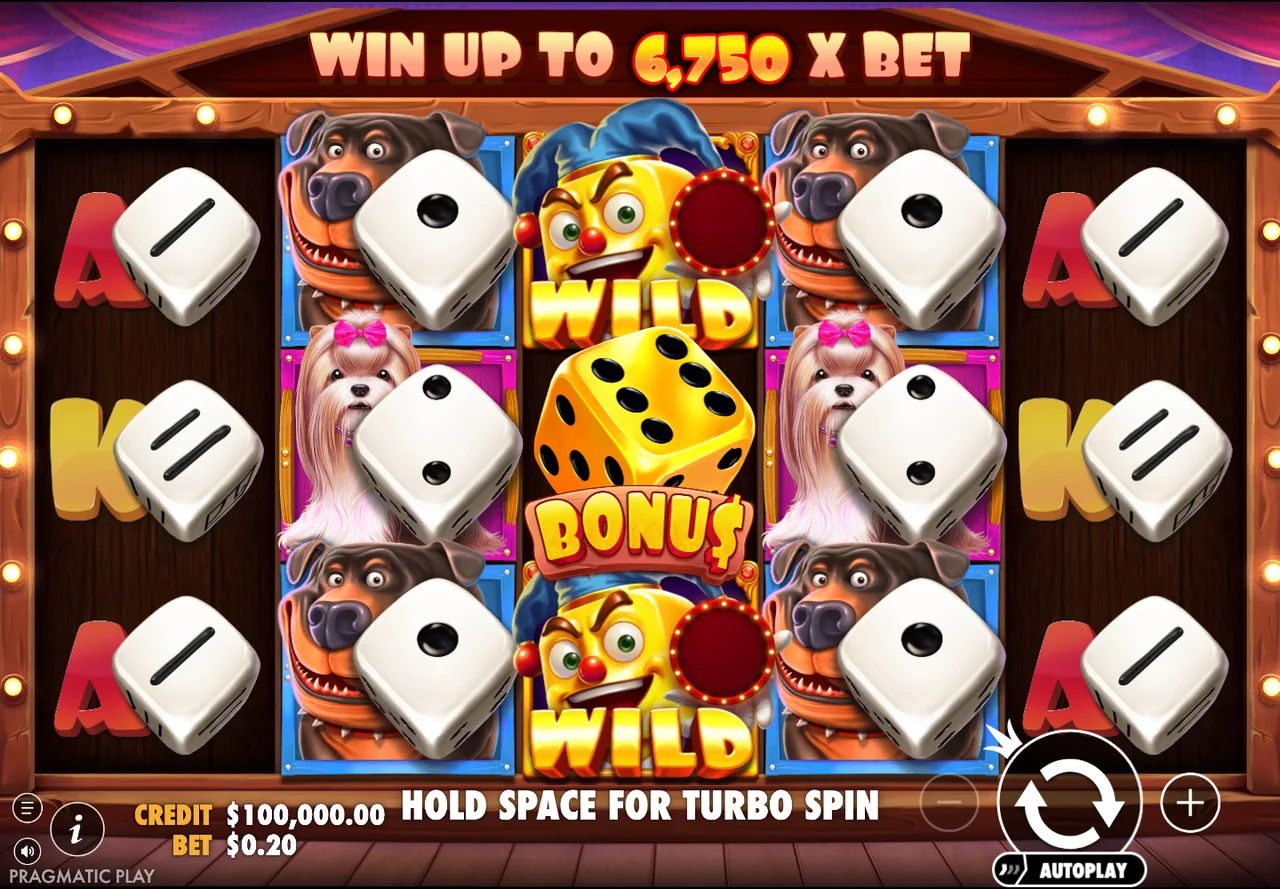
The selection display and the main reel window answer different questions. One shows how the feature begins, while the other shows how its symbols contribute after that entry. Keeping both stages visible in the explanation helps preserve the specific role of the dice-show presentation.
The wild is the best place to begin reading Dice Show. It appears on reels 2, 3 and 4, carries 2× or 3× and contributes to qualifying line wins. When several participating wild values apply, they add. That gives the special symbol a clear mathematical role alongside its place in the combination.
Open the game’s paytable for the ordinary-symbol awards. Here, we explain the special symbols and layout; use the game’s paytable for the complete ordinary-symbol payment matrix. The original’s complete table is useful as a separate reference for that game, while Dice Show’s own help identifies the awards attached to this version.
Watch a settled line highlight and then locate its wilds. Following the contributing positions makes the multiplier calculation easier to read than scanning the whole screen at once. During free spins, those positions become sticky, so you can also follow how the held arrangement develops. The compact 20-payline frame keeps both parts of the explanation close together.
The fixed paths also give the special symbol a clear visual context. A highlighted line identifies the current payment, and the printed wild value belongs to the contributing position on that line. During free spins, the sticky treatment adds continuity across arrangements. You can therefore see these mechanics through a few linked screen details: identify the line, locate its wild, read the multiplier and follow the held position into the next feature result.
18+ · Play responsibly. Gambling involves risk.
The base game uses 20 paylines on a stable 5×3 grid. Its middle-reel wilds bring 2× or 3× into qualifying payments, with contributing multipliers added together. You get the familiar Dog House relationship between ordinary symbols, line paths and a wild that helps connect the result.
That stable frame is Dice Show’s main attraction for a layout comparison. The original uses the same fixed-grid dimensions, while Megaways moves to 6 variable-height reels and Muttley Crew uses a 5×5 cluster system. Here, the payment structure stays compact, making it easy to concentrate on the wild calculation and the settled line display.
The demo is particularly useful for comparing presentation with the original. Open the paytable, read the stake unit and follow a completed line. Then look at how the same special symbol behaves when the game enters free spins. You are exploring a fixed-line version of the series, with the sticky-wild treatment supplying the link between ordinary play and the feature.
Dice Show offers another fixed-line demo. You can keep the layout and headline facts aligned with the original, then inspect its own paytable and feature instructions. It is a focused comparison before moving to the linked boards, royal values or modifier choices of the later games.
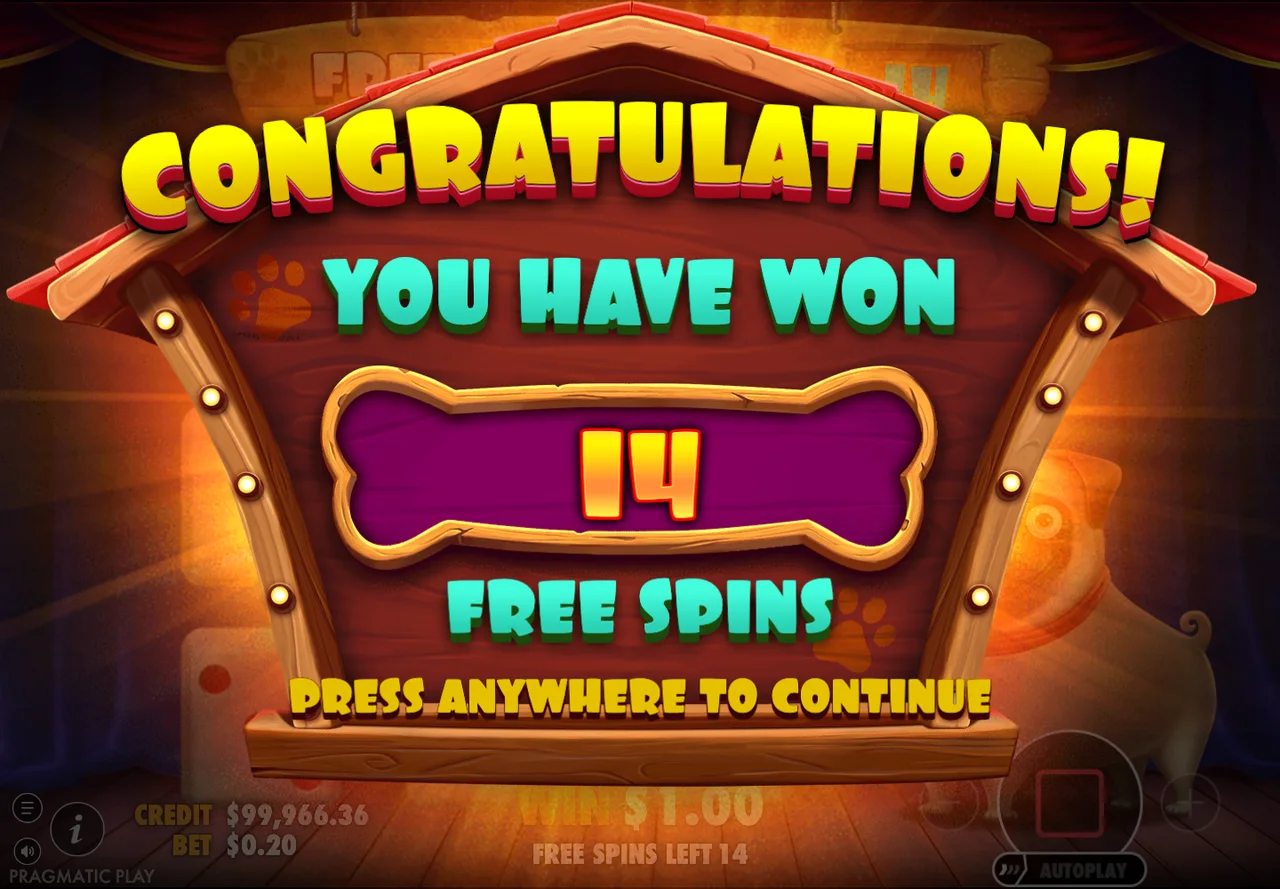
The feature-selection screen is worth reading in its own right. Its grid assigns spins before the main feature develops, so the opening award is a separate part of the experience from the sticky wilds that follow. Watch the transition between those stages and note what the screen actually confirms. The per-cell and total award ranges remain unknown here; the original has its own separate schedule, which cannot fill those gaps.
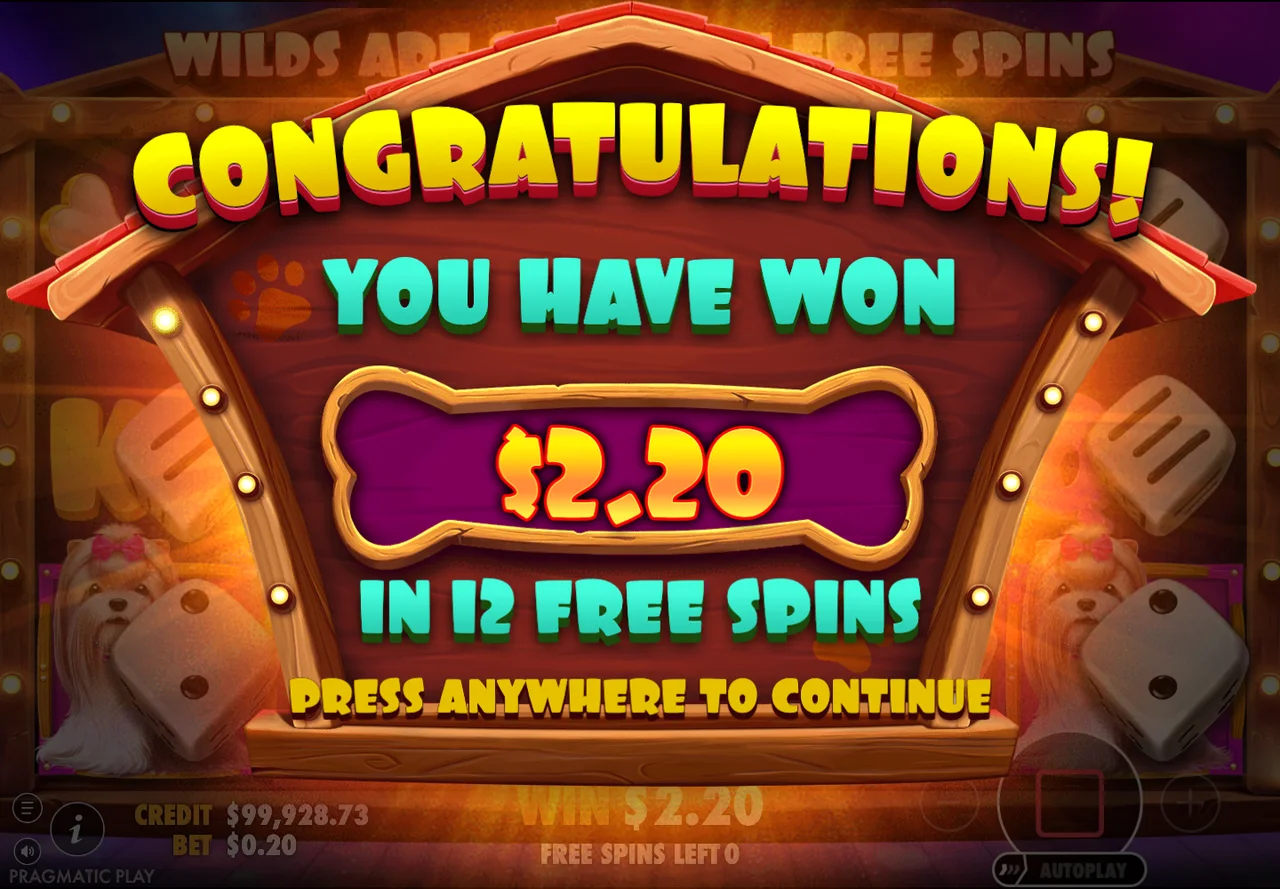
Once free spins begin, track the occupied wild positions alongside the remaining counter. This gives a clear way to describe how the feature board develops without relying only on the final payment. A wild that remains visible can contribute to later combinations, while each settled spin still depends on the symbols present on that result.
For comparison with the original, focus on the selection process and the presentation of the feature. Familiar dogs and a fixed window make the family resemblance immediate. The opening mechanism supplies the more useful distinction. Trying both demos with that question in mind makes the change easier to identify than a comparison based only on the maximum.
The saved gallery provides examples of visible states from our demo sessions. Its captions identify the inspected screen and amounts. Read those observations alongside the rule sections, preserving the difference between a captured award and the full set of awards that may be possible.
Wilds stay in place throughout Dice Show’s free spins. The positions stay on the board during the feature, giving later combinations a held pattern to work with. The underlying layout remains 5×3 with 20 paylines, so you can read the developing arrangement using the same fixed-line frame as ordinary play.
The wilds carry 2× or 3× and use additive combination when they participate in a payment. That is the mechanic to follow closely: locate the held symbols, watch the next ordinary symbols arrive and read the highlighted winning line. The interaction between a lasting position and a fresh combination is the heart of the feature.
The free-spin feature cannot retrigger. The opening scatter count and spin-award schedule are not resolved in our fact file, so the in-game feature panel supplies those instructions for the version you open. We keep this review focused on the way its wilds stay in place rather than borrowing the original’s award table. That makes the demo and its help a useful companion to the layout and wild comparison.
| Scatters |
|---|
| 3 |
Our demo samples describe the recorded sessions only. They do not predict future results.
3,700 · Base spins
Focus or point to a bar to read its value.
Across 3,700 base spins, 26.35% paid something, free spins began 1 in 206 spins and the recorded return was 89.95%.
The 18 naturally triggered features averaged 96.72× the bet, with a best result of 378.85×.
18+ · Play responsibly. Gambling involves risk.
Dice Show has 96.51% RTP, medium volatility and a 6,750× maximum. Those headline figures match the original in our fact set. If you enjoy comparing presentation while keeping the main specification columns aligned, these two games form a useful pair.
The stable layout is another shared attribute: 5 reels, 3 rows and 20 paylines. Its wilds also use the same 2× or 3× additive values on reels 2, 3 and 4. This gives you several concrete similarities to work with before exploring the interface and the feature help in each demo.
The rating still differs because our rubric considers feature documentation and pace in our base-game spins as well as headline specifications. We have fewer detailed feature rules for Dice Show, while the original includes its complete ordinary-symbol table and opening selection-grid awards. The percentage remains a theoretical configuration figure, and the in-game information panel identifies the setting attached to the version you have opened.
Those shared headline figures make the original-versus-Dice comparison unusually focused. Layout, volatility, RTP and maximum can stay aligned in your notes while you inspect how each game presents its rules and result highlights. This guide explains the original’s feature in more detail; Dice Show’s help provides the remaining opening instructions for its own version. This is a useful pair for players who enjoy a stable line system and prefer comparing presentation before moving to a more elaborate sequel.
The original is Dice Show’s closest specification comparison. Their fixed layouts, RTP, volatility and maximum all match, and both have additive middle-reel wilds with sticky behaviour in free spins. Open the demos side by side if the familiar fixed-line format is what you enjoy.
For a more pronounced feature change, try Royal Hunt. It keeps the same fixed dimensions while adding royal 10× and 20× values and a choice of feature purchases. Multihold takes that layout into extra boards, with copied sticky positions and staged grid unlocks. Those are stronger structural changes than Dice Show’s headline specification alone.
Megaways and Muttley Crew are the alternatives when you want the payment system itself to change. The former uses variable-height reels; the latter uses clusters. Dice Show belongs with the compact fixed-line choices. That makes it a useful demo for comparing how the family presents a familiar set of core mechanics, rather than for finding the widest choice of feature modes.
For a feature-menu comparison, Big is the most direct contrast at the fixed-line end of the series. It keeps the compact dimensions but adds multiple wild sizes, ghost interaction and selectable modifier configurations. Royal Hunt stays compact too, with a standard/royal distinction and larger royal values. Dice Show is the more familiar fixed-line option among those options, giving you another familiar line game to explore before choosing which additional feature layer interests you most.
The fixed 5×3 grid gives Dice Show a compact screen to explore. Begin with the reels and the paytable, then follow how a settled line and its participating wild values are shown on your device. A stable layout makes those details easy to compare with the original.
The middle reels deserve particular attention. Wilds can appear on reels 2, 3 and 4, so keep their positions and printed 2× or 3× values in view as a result settles. During free spins, follow how the held pattern remains part of the next arrangement. This is the clearest visual explanation of the way wilds stay in place.
Use the game’s help for the full opening feature instructions and ordinary-symbol awards. This review keeps the fixed dimensions and wild rules beside the demo as a quick reference. If you want a contrasting screen afterwards, open Multihold for linked boards or a Megaways title for a wider variable-height arrangement. Dice Show stays with the familiar compact line format.
18+ · Play responsibly. Gambling involves risk.
Dice Show is a sensible demo choice when you like the original’s compact fixed-line structure. Its core mechanics are straightforward: 20 paylines, middle-reel multiplier wilds, additive values and sticky positions in free spins. Its 96.51% RTP and 6,750× maximum also give you an unusually close specification comparison with the original.
We enjoy having that alternative in the line-up because the family contains several much larger mechanical changes. You can compare Dice Show with the original before deciding whether to move to extra grids, royal multipliers or a variable-height format. The stable layout keeps the emphasis on the wilds and line results.
Having fewer detailed feature rules available limits how much depth we can credit in our rubric. For a fuller written paytable and opening-award explanation, the original review has more of that detail available. For a broad feature menu, The Big Dog House offers more choices. Dice Show’s place is the compact, familiar end of the series.
The layout has 5 reels, 3 rows and 20 paylines. It belongs to the fixed-line part of the family, alongside the original and several sequels. Megaways uses changing heights, while Muttley Crew offers the cluster-based alternative.
Wilds carry 2× or 3× on reels 2, 3 and 4. Contributing values add when they participate in a qualifying payment. During free spins the wild positions are sticky, giving the feature a developing pattern on the same fixed grid.
Both have an RTP of 96.51%, with medium volatility and a 6,750× maximum. Their fixed-grid dimensions also match. Those similarities make the demos useful for a close presentation comparison, while each game’s help supplies its complete rules.
A 3×3 grid assigns a random number of spins to each cell. The per-cell and total award ranges remain unknown; the original’s selection-grid schedule belongs to that separate game. Wilds stay in place during the ensuing free spins, with no retrigger.
Open the paytable, then watch a settled line containing a multiplier wild. Locate the contributing values and follow their additive calculation. When free spins appear, watch the held positions across successive arrangements to see how the sticky treatment changes the feature.
The original is the closest headline-specification match. Royal Hunt adds royal multipliers to the fixed format, while Multihold introduces extra boards. For a change of payment system, try a Megaways title or Muttley Crew and compare their layouts with Dice Show’s stable grid.

RTP: 96.51% · Max Win: 6,750×

RTP: 96.55% · Max Win: 12,305×
RTP: 96.06% · Max Win: 9,000×

RTP: 96.52% · Max Win: 10,000×

RTP: 96.5% · Max Win: 7,500×

RTP: 96.53% · Max Win: 8,000×

RTP: 96.53% · Max Win: 15,000×

RTP: 96.5% · Max Win: 25,000×